

Most people stand in their kitchen holding a hot pad in one hand and an ice pack in the other, wondering which one to use. And when you’re in pain, that confusion feels even worse. You want relief now, but knowing whether to use heat or ice for injury makes all the difference in how well your body heals.
Let me walk you through it in simple, practical terms — the way I do with patients every day — so you can finally stop guessing and start healing properly.
Acute Injuries: When Everything Is Fresh, Swollen, and Angry
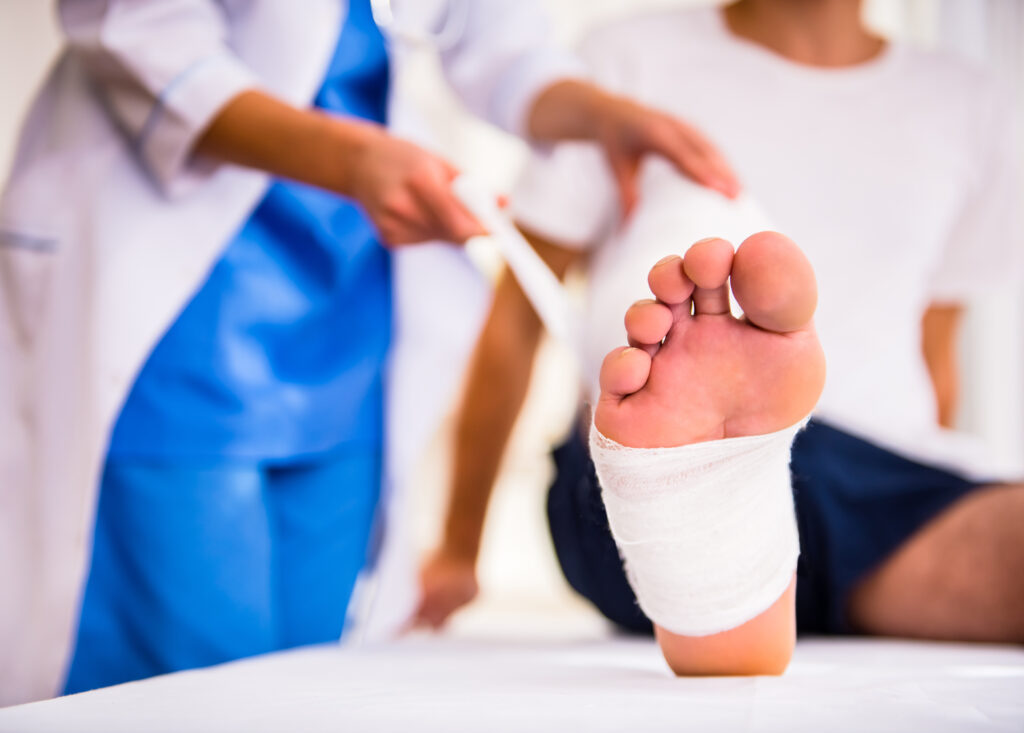
The moment you injure yourself — today, this hour, this minute — your body launches into emergency mode. Blood vessels open, fluid pours in, tissues swell, and the pain kicks in immediately to warn you that something has gone wrong.
This is not the time to wonder whether to use heat or ice for injury. The answer is always ice.
Ice calms the chaos. It slows down that sudden, dramatic swelling and keeps your body from turning a simple sprain or twist into a full-blown, days-long inflammation storm.
If you’re an athlete who needs to get back onto the field, ice buys you time by quieting things down. It’s not fixing the injury, but it’s preventing the situation from escalating.
Early rule to tattoo into your brain:
Acute injury = Ice. Every time.

A Few Days Later: When Heat Finally Enters the Picture
After the initial swelling settles — usually by day two or three — your tissues enter a new phase of healing. This is when therapists often talk about alternating heat and cold. And there’s a reason they do.
Heat increases blood flow, delivering nutrients, oxygen, and all the raw materials your body needs to rebuild. Cold tightens things back up, reducing leftover inflammation and pushing excess fluid out.
It’s like a pump:
- Heat brings the healing in.
- Cold clears the irritation out.
People often ask me, “Should I use heat or ice for injury at this point?” The answer is: both, but in a controlled cycle. Heat prepares the tissue, cold resets it. This back-and-forth rhythm encourages proper healing instead of letting inflammation stagnate.

Chronic Pain: Why People Love Heat but Actually Need Cold
This is where most people — understandably — get things wrong.
When pain hangs around for weeks or months, heat feels soothing. And because it feels good, people assume it must be helping. But if your goal is real, lasting healing, cold is often the tool your tissue actually needs.
Chronic pain almost always has lingering inflammation underneath it. Not the dramatic swelling of a new injury, but a slow, ongoing irritation that keeps the tissues sensitive.
This type of inflammation does something sneaky:
it encourages abnormal nerve growth.
Nerves can grow into tissues where they do not belong — like cartilage or tendons. Then, those nerves send pain signals for no good reason. You move slightly, and it hurts. You rest, and it still hurts. It feels like the injury never healed.
Using heat or ice for injury at this stage becomes very important — and ice wins.
Cold helps shrink the blood vessels feeding this unwanted inflammation. It also helps calm those overactive nerves that have set up shop where they shouldn’t be.
Heat, unfortunately, can make this type of chronic pain feel more settled temporarily, but it often fuels the deeper problem.

Rogue Nerves: The Hidden Reason Your Pain Won’t Stop
Let’s talk more about these misplaced nerves, because this is where chronic pain becomes so frustrating.
With chronic inflammation, nerves can creep into:
- cartilage
- tendons
- joint linings
- areas of scar tissue
These tissues are not built to handle nerve endings. So when nerves invade, everything becomes sensitive. You’re not “imagining the pain.” The nerves are literally in the wrong place.
Cold therapy helps shift the environment so these nerves calm down instead of firing constantly.
This is why knowing whether to use heat or ice for injury matters so much: one soothes temporarily, the other promotes real healing.
Real Life Examples: My Knee, My Toe, My Achilles
I don’t just teach this — I use it.
I’ve personally treated:
- a stubborn knee
- an irritated big toe
- an angry Achilles tendon
And in every case, cold was the long-term healer.
When I treated my Achilles tendon, I used cold therapy twice a day for a month. Not because it gave immediate relief, but because I understood the biology. Chronic tendon pain responds slowly. The tissues need repeated reminders that the inflammation cycle is over.
Most people quit after a few days, thinking it’s not working. But healing is often quiet at first. You have to stay consistent long enough for the tissues to respond.
The Hardest Part: Sticking With It Long Enough to See Change
Most people don’t struggle because treatment fails — they struggle because they stop too early.
Chronic inflammation doesn’t respond instantly. The tissues need repetition. Tendons especially are slow healers, and they improve gradually, not dramatically.
If you’re wondering whether to use heat or ice for injury that has been bothering you for weeks, the answer is: cold, consistently, even on days you doubt it.
Healing isn’t dramatic. It’s steady. Quiet. Cumulative.
Your job is to stay the course.
Clarity, Confidence, and Healing
Remember the simple rule:
- Acute injury (today) → Ice
- Early recovery (day 2–5) → Heat + cold cycles
- Chronic pain (weeks or months) → Cold, consistently
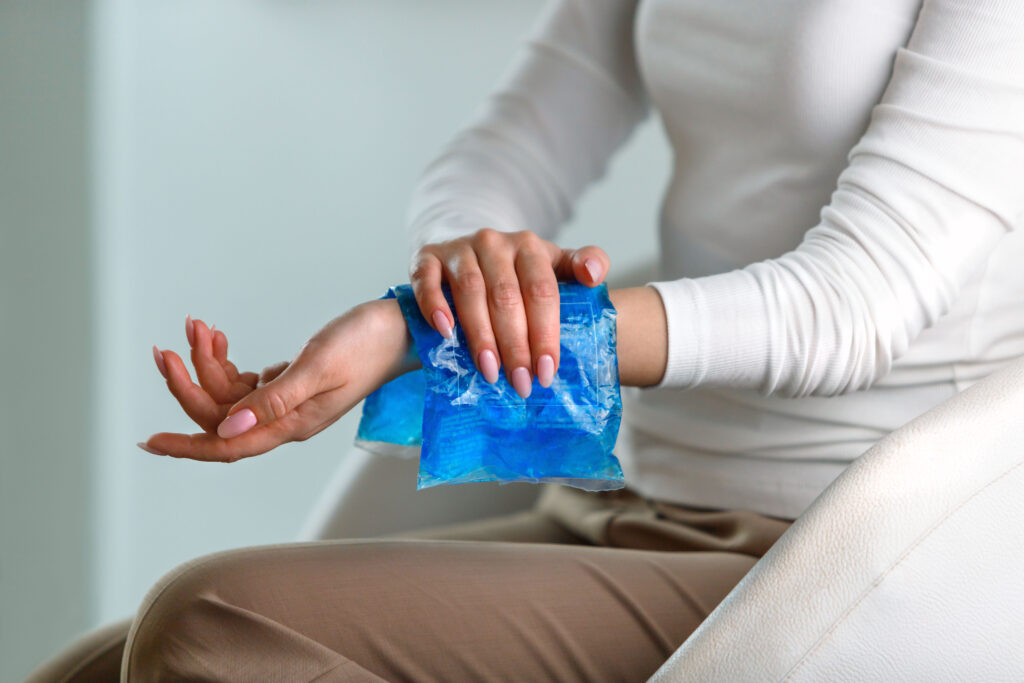
So the next time you’re deciding whether to use heat or ice for injury, choose based on biology — not just comfort. Your body knows how to heal. You just need to support it with the right tools at the right time.
And when you do, you give yourself the best chance of reducing pain, restoring movement, and getting back to your life with confidence.
Ready to Take Control of Your Pain? Start With the Tools That Actually Work.
If you’re tired of guessing, Googling, or hoping things will magically improve, I’ve put everything I’ve learned into the F**k Off Pain book series and my online course. They’re built to help you understand your body, retrain your mind, and finally break the pain cycle for good.
Order the F**K Off Pain books or join the course today and take the next step toward getting your life back.